
Overview
Our research on nanotribology is motivated by endurance and reliability requirements of nanoscale devices with moving parts and opening and closing contacts. Applications of interest are derived from scanned probe microscopy such as data storage, nanofabrication and metrology. Therefore, the fundamentals of friction and wear are studied regarding the interaction of a sharp tip with a flat surface. In the corresponding research projects fundamentals of tribology, materials science issues and novel operating conditions are examined in parallel.
Tip wear

Figure 1. Electron micrograph of a tip before
and after sliding 300 m on a polymer surface
at 1.5 mm/s.Tip wear, or the wear of so-called single asperities, is a limiting factor in the implementation of probe-based devices and MEMS/NEMS devices in general. Fundamental mechanisms of wear at this regime include the wear by abrasion of material in an atom-by-atom fashion [1,2,3].
Silicon and silicon nitride are commonly chosen for the mass-microfabriation of sharp tips for probe-based devices. Alternative tip materials and the wafer-scale fabrication thereof are explored in several collaborative projects [2,4]. The focus is on materials relevant for micro-/nanoscale applications, such as diamond-like carbon [2], silicon carbide [4], and platinum silicide because these materials are suitable for contacts involving mechanical interaction under various atmospheres, thermo-mechanical applications or electrical addressing.
Collaboration partners include the groups of Prof. R. Carpick (University of Pennsylvania, USA) and Prof. K. Sridharan (University of Wisconsin, Madison, USA) and the EU consortium ProTeM.
Surface friction and wear
Friction on polymer materials controls the wear of surface and tip in most storage and patterning applications. The fundamentals of friction processes are studied as a function of temperature in order to uncover the link to deformation processes that are governed by their particular kinetics. The wear of surfaces under the mechanical interaction of a sharp tip has been studied intensively in the past. For storage and patterning applications, the surface consists of organic polymers that are easily deformed, roughened or even degraded. Our interest lies in characterizing the temperature dependence of such processes [5,6,7].

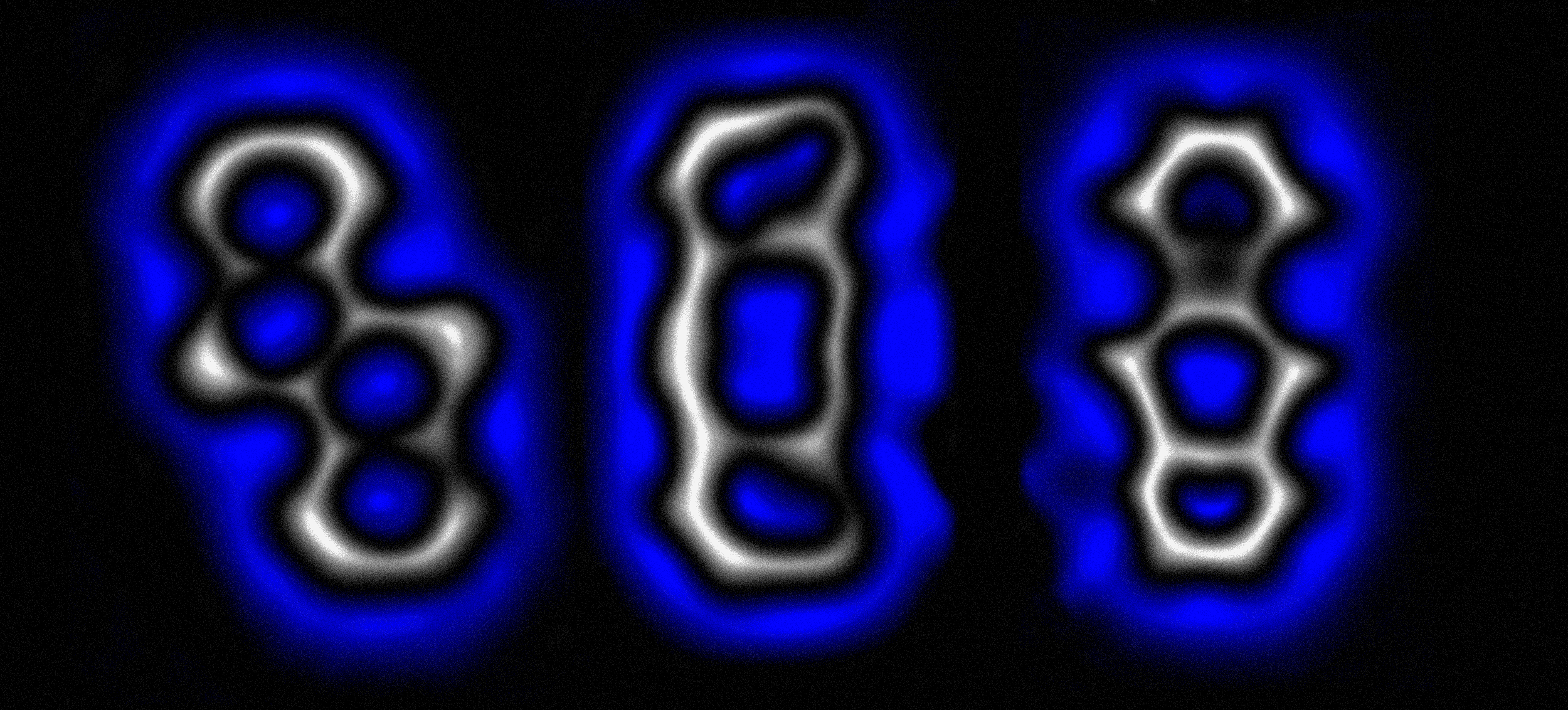
Figure 2. Surface as a function of tip temperature after sliding on different
polymers. A standard linear polymer
(left) shows ripple patterns and has a
dramatic change of wear when going
through the glass transition temperature.
Highly cross-linked materials (middle
and right) show no wear at lower
temperatures but may be removed at
higher temperatures when the cross-link
sites open (middle).
Collaboration partners include the group of A. Schirmeisen (University of Muenster/CeNTech Muenster, Germany).
As a technical solution for nanoscale applications, cross-linking plays a major role as a universal and powerful wear reduction scheme that leaves nanoscale homogeneity intact. This was studied for various materials, topologies and cross-linking schemes. The wear of such cross-linked surfaces is studied for both sliding and repeated deformation as used in the data storage context [8,9,10].
Collaboration partners include the group of R. Berger and H.-J. Butt (Max Planck Institute for Polymer Research, Mainz) and the EU consortium ProTeM.
Dynamic operation modes
To solve the wear problem of the tip and surface, the mutual mechanical interaction has to be minimized without compromising the operating speed of the devices and the ease of implementation. For this we have studied dynamic operation modes that are faster and easier to control than conventional tapping or frequency modulation techniques [11].
References
[1] B. Gotsmann and M. A. Lantz,
Physical Review Letters 101, 125501, 2008.
[2] H. Bhaskaran, B. Gotsmann, A. Sebastian, U. Drechsler, M. A. Lantz,
M. Despont, P. Jaroenapibal, R. W. Carpick, Y. Chen, and K. Sridharan,
Nature Nanotechnology 2010.
[3] T. Jacobs, B. Gotsmann, M. A. Lantz, R. Carpick,
Tribology Letters 39 (3), pp. 257-271, 2010.
[4] M. A. Lantz, B. Gotsmann, P. Jaroenapibal, T. D. B. Jacobs, S. D. O'Connor, K. Sridharan, and R. W. Carpick,
Adv. Funct. Mater.. doi: 10.1002/adfm.201102383.
[5] Gotsmann and U. Duerig,
Langmuir 20 (4), pp 1495–1500, 2004.
[6] L. Jansen, A. Schirmeisen, J. L. Hedrick, M. A. Lantz, A. Knoll, R. Cannara, and B. Gotsmann,
Physical Review Letters 102, 236101, 2009.
[7] B. Gotsmann, U. Duerig, J. Frommer, C. J. Hawker,
Advanced Functional Materials 16 (11), pp 1499 – 1505, 2006.
[8] B. Gotsmann, U. T. Duerig, S. Sills, J. Frommer, and C. J. Hawker,
Nanoletters 6 (2), pp 296–300, 2006.
[9] R. Berger et al.,
Langmuir, 2007, 23 (6), pp 3150–3156.
[10] T. Altebaeumer, B. Gotsmann, H. Pozidis, A. Knoll and U. Duerig,
Nano Lett. 8 (12), pp 4398–4403, 2008.
[11] M. A. Lantz, D. Wiesmann, and B. Gotsmann,
Nature Nanotechnology 4, pp. 586–591, 2009.