IBM®
Skip to main content
    Zurich Research Laboratory      Terms of use


     Home      Products      Services & solutions      Support & downloads      My account     
IBM Research

News

IBM researchers receive technology award of Eduard Rhein Foundation

   German 
Zurich, Switzerland, 15 September 2005 — The 2005 Technology Award of the Eduard Rhein Foundation was awarded to two researchers of IBM Research - Zurich. Together with Professor Hisashi Kobayashi of Princeton University, IBM's Drs. François Dolivo and Evangelos Eleftheriou received this prestigious prize for their pioneering contributions to the data-recording technology in hard-disk drives, which enabled significant increases in recording densities and data rates for many decades.

The Eduard Rhein award is one of the most important European prizes in Information Technology. The award ceremony took place in the Deutsches Museum in Munich, Germany.

Hard-disk drives are a vital component of computer systems of all sizes; they allow data and programs to be stored safely even when the computer is not running. To read out the stored information correctly, peak detection was used initially. Peak detection uses a relatively simple method to read the stored bits in the read signal. Signal pulses are compared with a threshold value, and any pulse peak above the threshold is read out as a binary "1", whereas any peak below the threshold is read out as "0". However, as the storage density and data rates of modern hard-disks continued to increase, the demands placed on the detection accuracy of read signals also increased because read signals are weak and distorted, and may be overlaid by noise from the storage medium and electronics.

It was Hisashi Kobayashi who, in 1970/71, laid the theoretical framework for the development of novel detection methods during his work at the IBM Thomas J. Watson Research Center in Yorktown (USA). He was the first to suggest that data-transmission methods could be employed to detect the bits in the read channel. Specifically, he suggested partial-response signaling in combination with maximum likelihood detection based on the Viterbi algorithm. This algorithm determines all possible event sequences that could have led to a specific result and then selects the most likely of these sequences. Kobayashi showed that a detector based on these principles offers substantial advantages over peak detection.

François DolivoAs is often the case with groundbreaking insights, Kobayashi's idea was ahead of its time. Not until François Dolivo systematically investigated signal-processing alternatives for disk drives in the second half of the 70s was Kobayashi's idea reconsidered. Dolivo and his team developed a new recording technology, which they called Partial-Response Maximum-Likelihood Sequence Detection or PRML for short.

With increasing recording density, the interference between signals also increased, making reliable signal detection more difficult. One way to address this issue is to ensure that a predefined minimum of physical space is maintained between two signal pulses, which, however, has the drawback of limiting the achievable recording density. Another possibility is to allow pulse interference to happen in a controlled manner. This is what is done in PRML: a model describes which interference is allowed. The PRML detector then observes a sequence of pulses und applies this model of pulse interference to recover the recorded information reliably. The resulting increase in detection accuracy made higher recording densities and data rates possible. In 1990, Dolivo's work culminated in the announcement of the industry's first hard-disk-drive product using the new channel. PRML, which rapidly became the de-facto industry standard, boosted storage density and data rates, enabling compound annual growth rates of 60% and 40%, respectively, for a number of years. In the late 90s, however, the steady increase in recording densities and data rate could only be sustained with further refinements of the detection process.

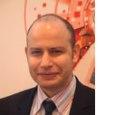
Evangelos EleftheriouIn the early 90s, Evangelos Eleftheriou successfully developed a new detection method that allowed a further increase in the recording capacity. This process, called Noise-Predictive Maximum-Likelihood (NPML) sequence detection, predicts noise in the read signal iteratively and removes the correlation of the noise signals by means of appropriate filtering. In this iterative process, which is part of the sequence detector, the noise power is also reduced, i.e. the signal-to-noise ratio is improved. To achieve as reliable a result as possible, noise prediction is performed in every step of the readout process, from detection to post-processing. The NPML architecture enabled a further increase of the linear recording density by 50 to 60% over that of PRML. The new architecture was applied in 2000 to IBM disk-drive products. Today, NPML and variations thereof have become the accepted recording technology in the hard-disk industry.

Eduard Rhein Foundation

The Eduard Rhein Foundation was created in 1976 to honor outstanding achievements in research and/or development in the areas of radio, television and information technology. It awards one of the most important European prizes in the area of information technology. Indeed, the list of the international winners of the Eduard Rhein Basic Research and Technology Awards reads like a who's who of IT pioneers, including Claude E. Shannon, the father of modern information technology, Konrad Zuse, who developed the first freely programmable computer, and Tim Berners-Lee, who created the World Wide Web.

IBM Research - Zurich

IBM Research - Zurich (ZRL) is the European branch of IBM Research. This network of some 3500 employees in eight laboratories around the globe is the largest industrial research organization in the world. The Zurich laboratory itself currently employs about 330 persons representing more than 30 nationalities. World-class research and outstanding scientific achievements-most remarkably two Nobel Prizes-are associated with this lab, which has been in existence since 1956. The spectrum of research activities at ZRL ranges from basic science and fundamental research in physics and mathematics to the development of computer systems and software to the design of novel business models and services that are becoming available "On Demand".

 
News archive News archive
   IBM joins EDISON project to build smart grid for electric cars   
   Leading organizations unveil new interoperability specification for encryption key management to aid IT security, compliance and data recovery   
   Welcoming the “Great Minds” winners 2008   
   IBM marks more than 50 years of healthcare technology leadership   
   “Security-on-a-Stick” to protect consumers and banks from the most sophisticated hacker attacks   
   More news »    

Award ceremony
(click on image for enlargement)
Eduard Rhein Prize 2005
Prof. Dr. Wolfgang Heckl

Greeting by Prof. Dr. Wolfgang Heckl, Director of the German Museum.

Waiting for the big moment
Waiting for the big moment.
Prof. Dr. Hisashi Kobayashi
Prof. Dr. Hisashi Kobayashi, acceptance speech.
Dr. Francois Dolivo
Dr. François Dolivo, acceptance speech.
Dr. Evangelos Eleftheriou
Dr. Evangelos Eleftheriou, acceptance speech.
Prof. Dr. Rolf Gartz and Prof. Dr. Alexander Sviridov
And another prize: Prof. Dr. Rolf Gartz (center), President of Eduard Rhein Foundation, receives award of the International Information Academy of the UN for his lifetime achievements in the field of IT. Prof. Dr. Alexander Sviridov (right), president of IIA, presented the award.
Group portrait of laureates
Group portrait of laureates.
Musician Mona Haberkern
Mona Haberkern, violin soloist.

Press inquiries
Nicole Herfurth
Media Relations
IBM Research GmbH
IBM Research - Zurich

Säumerstrasse 4
8803 Rüschlikon
Switzerland

Tel +41 44 724 8445
Fax +41 44 724 8952
e-mail: nih@zurich.ibm.com
    About IBM Privacy Contact