
|
San Jose, U.S., Zurich, Switzerland, 22 March 2007At
the IEEE Semi-Therm Conference 2007, IBM (NYSE: IBM) researchers
unveiled details on a new technique to significantly increase the
ability to cool computer chips.
The technique, developed by a team of scientists at IBM Research - Zurich in co-operation with Momentive Performance Materials,
formerly GE Advanced Materials, overcomes a barrier in chip cooling
by improving the application of the "glue" that binds
chips to their cooling systems. The new technology could allow for
faster computer chips to be cooled more efficiently.
In today's computer chips, as the circuits on chips get smaller
and smaller, the chip puts out more heat than ever before. To remove
the heat from the chip, a cooling system is attached to the microprocessor
using a special adhesive or glue. This glue is necessary to bind
the two systems together, yet it poses a real barrier in heat transport.
To improve the glue's heat-conducting properties, it is enriched
with micrometer-sized metal or ceramic particles. These particles
form clusters and build "heat-evacuation bridges" from
the chip to the cooler to make up for the glue's shortcomings. However,
even highly particle-filled pastes are still inefficient, consuming
up to 40 percent of the overall thermal budget, i.e. of the cooling
capacity available to draw the heat away.
IBM researchers now unveiled the reason and presented a novel technique
to solve this problem. By observing how the glue spreads when attaching
a chip with its cooling element, the scientists noticed a cross
forming in the paste, where large numbers of particles were pilling
up, inhibiting the ability to thin out the layers of glue. The scientists
were able to trace the cause of this back to the flow behavior of
the paste, which simply follows the path of least resistance. Along
the diagonals, the particles are pulled in opposite directions and
as a result they do not move anywhere and pile up on each other
as the squeezing process continues forming the "magic cross".
To overcome this problem, the team designed a special layout of
micrometer-sized channels or trenches in a tree-like branched
structure, consisting of larger and smaller channels, which functions
like an irrigation system for the paste at exactly those spots where
the particles would pile up. This allows the particles to spread
more homogeneously, and reduces the thickness of the resulting paste
gap.
The results obtained are impressive: The paste thickness could
be reduced by a factor of three, and the pressure needed to squeeze
the paste to the same bondline thickness could be reduced by a similar
factor. These lower assembly pressures ensure that the delicate
components and interconnects below the chip are not damaged as the
chip package is created. The channels also allow pastes with higher
fill factor and higher bulk thermal conductivity to be squeezed
to thinner gaps, thereby reducing the thermal resistance of the
paste interface considerably by more than a factor of three. The
new technology allows air-cooling systems to remove more heat and
helps to improve the overall energy efficiency of computers.
To further optimize the technology in real cooling systems and to
demonstrate its feasibility, the IBM team co-operated with paste
manufacturer Momentive Performance Materials, Wilton, CT, U.S.A.
Together with other industry-leading suppliers tools are developed
to define the surface channels through the same copper stamping
process currently used to fabricate high volume chip lids. This
will define a full supply chain of low-cost parts to quickly integrate
the new technique into products.
The work is being published in the paper "Hierarchical Nested
Surface Channels for Reduced Particle Stacking and Low-Resistance
Thermal Interfaces" by R. J. Linderman, T. Brunschwiler, U.
Kloter, H. Toy, B. Michel, Proc. 23rd IEEE SEMI-THERM Symp., 2007.
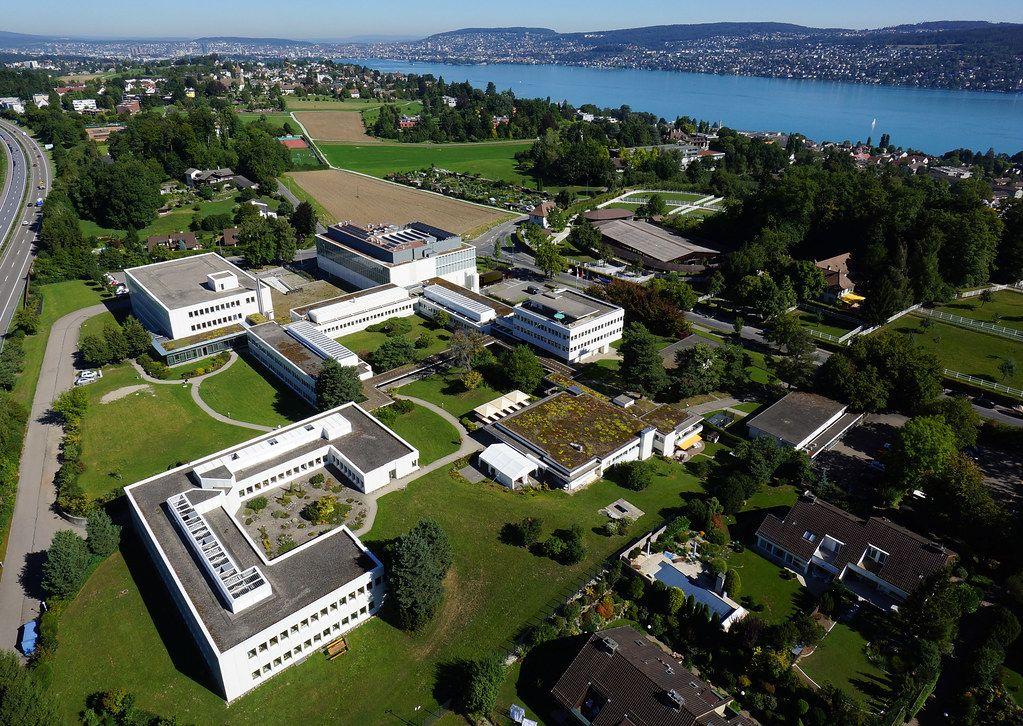
About IBM Research - Zurich
IBM Research - Zurich (ZRL) is the European branch
of IBM Research. This worldwide network of some 3500 employees in
eight laboratories around the globe is the largest industrial IT-research
organization in the world. ZRL's spectrum of research activities
ranges from basic science and fundamental research in physics and
mathematics, to the development of computer systems and software,
to the design of novel business models and services.
|