
|
Zurich, Switzerland, March 27, 2008 "PrimeLife" – Privacy
and Identity Management in Europe for Life – is a new three-year
research project, funded by the European Union’s 7th Framework
Programme with 10 million euros. Coordinated by IBM’s
(NYSE: IBM) Zurich Research Laboratory and involving 14 other partners,
its objective is to empower users to manage and control, throughout
their entire lifetimes, their personal data and privacy whenever
they participate in Web 2.0 technologies, such as social networks
or virtual communities.
Individuals in today’s information society want to protect
their privacy and retain control over their personal information,
regardless of their activities. Information technologies hardly
consider these requirements, thereby putting the privacy of the
citizen at risk.
Today, the increasingly collaborative nature of the Internet enables
any individual to compose services and to contribute and distribute
information. In the course of a lifetime, throughout all its different
phases and facets, individuals will leave a trail of personal data.
This state of affairs harbors numerous drawbacks to many individuals
because of the potential, unforeseen uses of such data not endorsed
by the individual concerned. For example, employers might access
applicants’ online community profiles before inviting them
to a job interview. In some countries, social networks have used
details of customers’ online shopping habits or personal
preferences without their permission.
Such incidents raise substantial new privacy challenges, including
how to protect privacy in emerging Internet applications such as
collaborative scenarios and virtual communities as well as how
to maintain lifelong control over one’s personal data.
The EU project PrimeLife addresses these issues. Its objective
is to bring sustainable privacy and identity management to networks
and services. The first, short-term goal of PrimeLife is to provide
scalable and configurable privacy and identity management in new
and emerging Internet services and applications, such as virtual
communities and Web 2.0 collaborative applications.
The second, longer-term goal of PrimeLife is to protect the privacy
of individuals throughout their entire life span. Every individual
leaves a multitude of virtual footprints during a lifetime of digital
interactions, and technological advancements facilitate extensive
data collection, unlimited storage, as well as reuse and lifelong
linkage of these digital traces.
PrimeLife will empower individuals to solve the core privacy and
trust issues pertaining to these challenges. Its long-term vision
is to counter the trend toward lifelong personal data trails without
compromising functionality.
“We aim to develop a toolbox, which you could describe as
an integrated electronic ‘data manager’,” explains
Jan Camenisch, PrimeLife technical leader at IBM’s Zurich
Research Lab. “The data manager provides users with an overview
of which personal data he or she uses when, where, and how. It
lets users define default privacy settings and preferences for
all kinds of applications, and it prompts the user if applications
request data for any other purposes.”
Resolving these issues requires substantial progress in many underlying
technologies. PrimeLife will substantially advance the state of
the art in the areas of human–computer interfaces (HCI),
configurable policy languages, Web service federations, infrastructures
and privacy-enhancing cryptography. It thereby builds also on technologies
developed in the preceding EU project PRIME, of which the Zurich
Research Lab also had the technical lead.
Several PrimeLife partners are participants in industry and standardization
groups such as the World Wide Web Consortium’s PLING, Liberty
Alliance, ISO/IEC JTC 1, and ITU. Furthermore, PrimeLife will work
and interact with relevant open-source communities such as Higgins,
as well as with other research projects in order to achieve the
sustainability of these project results.
PrimeLife’s multidisciplinary consortium consists of the
coordinator, the IBM Zurich Research Laboratory, Switzerland, and
project partners from various countries: Center for Usability Research & Engineering,
Austria; Katholieke Universiteit Leuven, Belgium; GEIE ERCIM, France;
Unabhängiges Landeszentrum für Datenschutz Schleswig-Holstein,
Technische Universität Dresden, Johann Wolfgang Goethe-Universität
Frankfurt am Main, Europäisches Microsoft Innovations Center
GmbH, Giesecke & Devrient GmbH and SAP AG, Germany; Università degli
Studi di Bergamo and Università degli Studi di Milano, Italy;
Stichting Katholieke Universiteit Brabant, The Netherlands; Karlstads
Universitet, Sweden; and Brown University, United States of America.
About the IBM Zurich
Research Lab
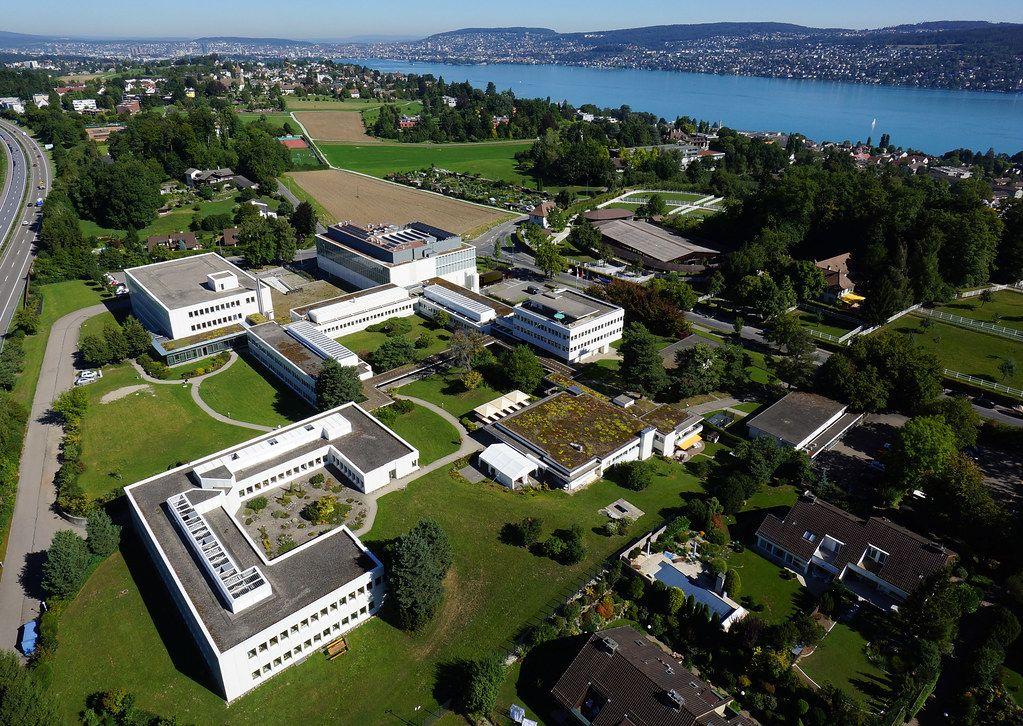
The IBM Zurich Research Laboratory is the European branch of IBM Research.
This worldwide network of some 3500 employees in eight laboratories
around the globe is the largest industrial IT research organization
in the world. The Zurich Research Laboratory, which was established
in 1956, currently employs some 330 persons, representing more than
30 nationalities. World-class research and outstanding scientific achievements—most
notably two Nobel Prizes—are associated with the Zurich Lab.
ZRL's spectrum of research activities ranges from basic science and
fundamental research in physics and mathematics, the development of
computer systems and software, to the design of novel business models
and services. |